

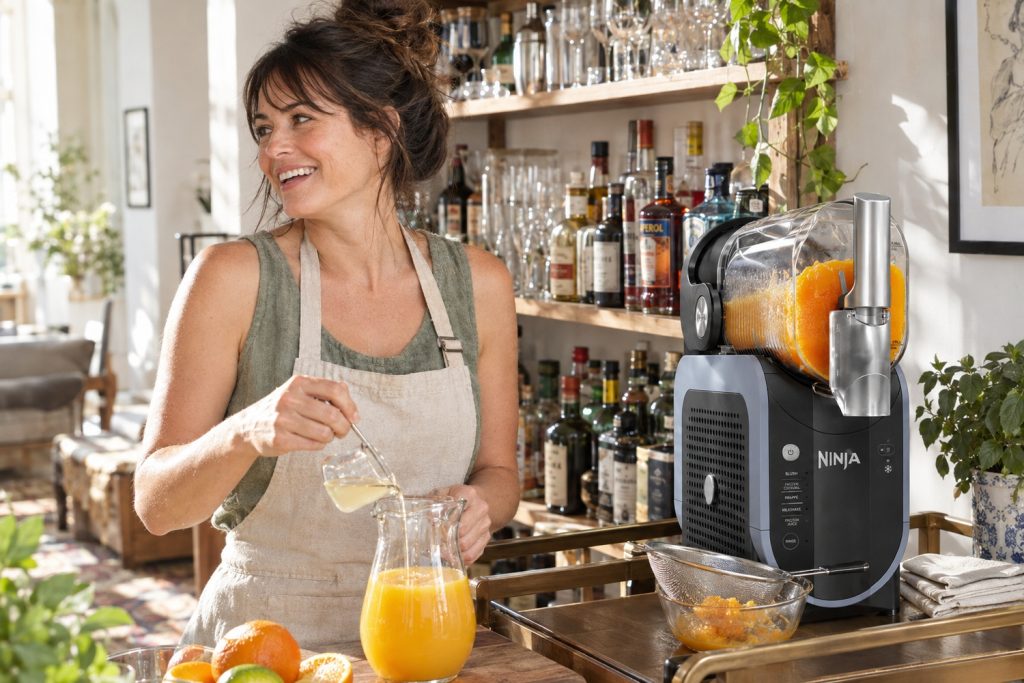
To successfully make a granita using fruit juice in your machine, the rule is simple: you absolutely need at least 4% sugar and a very cold liquid. Whether you use the Frozen Juice programme on your Ninja Slushi (FS301) or the XL and Max versions, this sugar content is what prevents your appliance from locking the mechanism. I learned the hard way about the antifreeze effect the day my homemade green juice triggered the temperature alert. I’ll explain how to perfectly dose your store-bought or freshly squeezed juices to get an ideal texture without putting strain on the motor.
The golden rule of Ninja Slushi: why sugar content is vital
Sugar isn’t just there for the taste, it plays a mechanical role as an antifreeze. Without it, the juice turns into a solid block of ice that freezes the central evaporator. The manufacturer sets a strict limit of 4% minimum sugar (that is 4 g per 100 mL), and I personally aim for 5 g to keep a buffer. This is why store-bought juices, often naturally rich in carbohydrates, generally work on their own. Conversely, freshly squeezed homemade juice almost always needs to be adjusted to reach this critical threshold.
The Frozen Juice programme: designed for this
The three models in the range (Ninja Slushi (FS301), Ninja Slushi XL (FS601) and Ninja Slushi Max (FS605)) all feature the Frozen Juice programme. This is the programme specifically for juices. Expect between 15 and 60 minutes of chilling, depending on the initial temperature of your liquid and your model. To save time and relieve the compressor, always use liquid that has been pre-chilled in the fridge. Never pour hot or lukewarm juice into the vessel.
Reference table: sugar content of the most common juices
To find out if your juice needs adjustment, check the label on the back of the bottle and look at the carbohydrate (of which sugars) line per 100 mL.
| Type of juice | Average sugar content | Verdict in the machine |
|---|---|---|
| Store-bought grape juice | Often > 15 g / 100 mL | Ready to use |
| Apple or pineapple juice | Around 10 to 11 g / 100 mL | Ready to use |
| Fresh orange juice | Around 8 g / 100 mL | Ready to use (if strained) |
| Pure lemon or lime juice | Around 2 g / 100 mL | Adjustment mandatory |
| Green juices (celery, cucumber) | Less than 3 g / 100 mL | Adjustment mandatory |
Naturally sweet juices like pineapple or apple work without any issues, as you can see if you try a pineapple elderflower fizz mocktail in your Ninja Slushi or a frozen apple and ginger preparation. Acidic juices or vegetable mixes often fall below the 4% mark and require your attention.
Descending lights: how to correct a juice that is not sweet enough?
If your preparation freezes too hard due to a lack of sugar, the machine will warn you clearly (all alerts are decoded in my troubleshooting guide). The alert is recognizable: the temperature lights turn on one by one in a descending order, accompanied by beeps.
The official procedure to correct the situation is strict. Remove the liquid from the vessel, then add 15 to 30 mL of syrup, honey, or sugar per portion. The crucial step is to mix these additions well into the liquid BEFORE pouring it back into the appliance. Do not pour pure syrup directly into the vessel.
If you want to reduce calorie intake, avoid classic artificial sweeteners that do not provide the required antifreeze texture. Only allulose is cited by the manufacturer as an alternative, with a sweeter drink.
Pulp, chunks, and ice cubes: what you must never put in the vessel
The heart of the system relies on the auger, which scrapes the ice around the central evaporator. This mechanism does not tolerate any obstacles. There is a strict prohibition: never put ice cubes or solid ingredients into the vessel. Blended fruits with large chunks or frozen fruits risk blocking the mixing process.
If you make your own juices, you must imperatively pass your preparations through a fine sieve. Thick citrus fibres or pulp residue will clump around the auger and force the motor. A perfectly smooth liquid is the guarantee of a consistent texture and quiet operation.
Maintenance after using fruit juice
Fruit acidity and sugar tend to stick to the walls. Use the RINSE cycle right after serving. This programme stirs the rinse water inside the vessel without cooling it, which loosens residue and greatly facilitates subsequent cleaning.
For a complete clean, all elements of the vessel are dishwasher safe in the bottom rack (without a heated drying option), with the absolute exception of the motor base and the evaporator. Remember to pay particular attention to cleaning the pour spout cover and its internal seal, an area where sugar tends to accumulate.
My anti-fail memo for squeezed juices
- Filter through a fine chinois: thick pulp makes the auger struggle. Straining avoids a blockage during service.
- Start with a chilled base: cold juices taken straight from the fridge shorten the setting time.
- Keep backup syrup: if in doubt about the acidity of your citrus fruits, always have cane sugar syrup ready on the side to adjust the preparation if the machine beeps.
Frequently asked questions
Can I put blended fruits in the Ninja Slushi to make a granita?
No, it is strictly advised against. The appliance does not tolerate any solid or fibrous ingredients (neither thick pulp, nor frozen fruits) as this risks blocking the auger that rotates around the evaporator.
What should I do if the machine beeps and the temperature lights descend?
This is the specific alert indicating that your juice lacks sugar (it is freezing too hard). Remove the liquid, add 15 to 30 mL of sugar, syrup, or very sweet juice per portion, mix well, put it back in the vessel, and restart.
Can I use any store-bought fruit juice?
Yes, provided it contains at least 4 g of carbohydrates (sugar) per 100 mL on the label. Industrial apple, grape, or pineapple juices generally work without any problems on the Frozen Juice programme.
How long does it take to freeze a fruit juice?
Generally count between 15 and 60 minutes. This depends on the volume, the ingredients, and the initial temperature of your juice.
Mastering the dosage of your fruit juices opens the door to an infinite number of homemade frozen drinks. Just keep an eye on that famous sugar threshold and don’t forget to filter your freshly squeezed juices well. What about you, what is the first fruit juice you turned into a granita in your machine? Did you have to add extra sugar?